
Are My Cats Playing or Fighting? Expert Guide to Cat Behavior
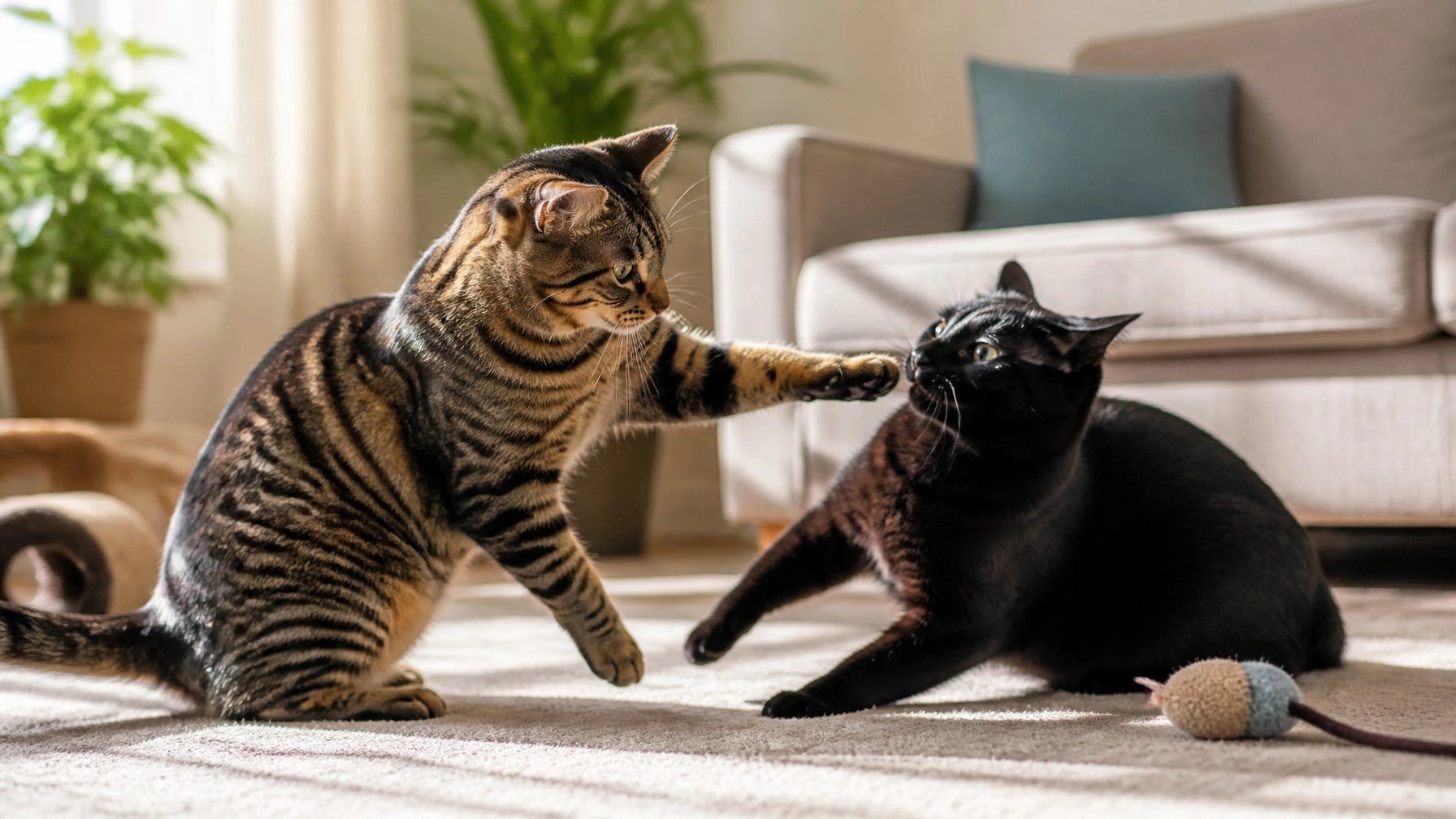
You know the difference between a rough romp and a real fight the moment you watch closely. Watch their sounds, body posture, and whether they take turns—these give quick clues. If the noise is low, bodies look relaxed, and they swap roles, they’re likely playing; loud hisses, flattened ears, puffed fur, or tense stances usually mean they’re fighting.
The information in this article is intended to educate cat parents and is not a substitute for veterinary guidance. In case of any concerns about your cat’s health, please talk with your veterinarian.
I’ll show you simple signs to watch and quick steps to calm things down if a fight starts. You’ll learn when to let them be and when to step in so your cats stay safe and calm.
Understanding what cats really think of their owners can also help you interpret why they interact with each other the way they do.
Key Takeaways
- Learn clear signs that show playful versus aggressive interactions.
- Spot quick warning signals that mean you should intervene.
- Use easy steps to reduce fights and encourage peaceful play.
Key Differences Between Cats Playing or Fighting: What To Look For
I watch cats closely to spot clear signs that separate rough play from real fights. Pay attention to body cues, sounds, whether they swap roles, and how they act after the interaction.
Body Language and Physical Signals
I look at posture first. During play, cats move with loose bodies, relaxed tails, and soft paws. They pounce, roll, and bat gently without claws fully extended. Eyes stay normal or slightly wide, not fixed and hard.
In a real fight, bodies stiffen and fur may puff up. Tails lash or puff straight out. Ears flatten tight against the head. You’ll see tense muscles, direct staring, lunging with claws out, and targeted bites. Injuries or repeated biting to the same spot mean aggression.
I watch how close they get. Play usually has breaks and distance. Fighting keeps high intensity and short distances, with one cat trying to escape or defend itself.
Vocalizations and Sounds
I use sound to judge the mood. Play sounds are light: soft chirps, short meows, and quiet trills. You may hear an occasional yelp if play gets too rough, but it’s brief and followed by resumed play.
Fighting makes loud, harsh noises. Hissing, long yowls, deep growls, and repeated screaming signal fear or anger. These sounds are sharp and sustained. If vocalizations are high-volume and urgent, I treat the interaction as a fight and separate the cats safely.
Listen for rhythm. Play has a stop-start rhythm with pauses. Fighting is fast, continuous, and noisy.
Role Reversals and Turn Taking
I watch whether cats switch roles. In real play, they trade chasing and pinning. One cat will be the chaser, then become the chased. This back-and-forth suggests consent and shared enjoyment.
If one cat always dominates, pins, or corners the other, that’s a sign of aggression. Lack of role reversal often leads to one cat showing escape behavior or hiding after an encounter.
I also note if one cat gives clear “time-out” signals—walking away, grooming, or sitting apart. When the other cat respects that break, play is likely. If the dominant cat pursues despite the pause, it’s not play.
After-Interaction Behavior
I check what they do next. After honest play, cats usually separate, groom, or nap near each other. They return to normal routines and show no visible signs of stress or injury.
After a fight, cats will avoid each other, hide, or show lingering agitation. Learning to recognize other signs your cat is stressed can help you identify tension before it escalates into a full fight. You might see limping, missing fur, or swollen areas. One or both may groom obsessively or refuse to eat. If injuries appear or avoidance continues, I recommend a vet check and behavior guidance.
I pay attention to how quickly they calm down. Fast calm-down and shared resting mean play. Ongoing tension or repeated clashes mean the relationship needs intervention.
Typical Play Behaviors in Cats
I watch for specific body language, sounds, and actions that show whether interactions are playful or hostile. Calm faces, short bites without claws, and balanced role changes mean friendly play; loud growls, flattened ears, and one-sided attacks point to real fighting.
Play Biting and Gentle Swatting
Play bites are short, targeted, and usually on non-vulnerable areas like a shoulder or neck. The cat will close its mouth softly and release quickly. If teeth touch skin but do not puncture, it’s often play.
Gentle swats use the paw without full force or exposed claws. You’ll see relaxed paws and a rhythmic back-and-forth. When claws extend or a cat strikes hard, the behavior can be aggressive instead of playful.
Watch for retaliation: in play, both cats take turns biting and swatting. If one cat consistently withdraws, cries, or avoids the other afterward, the bites are not welcome and you should separate them.
Chasing and Wrestling Dynamics
Play chases start with slow stalking and a clear invitation—tail up, ears forward, or a playful dash. Chases end without injury and the cats often swap roles, with the chaser becoming the chased.
Wrestling looks rough but stays balanced. Bodies remain loose, not puffed up. You’ll see gentle holds, short pins, and both cats using mouths and paws without hissing. If a chase turns into a pinned cat with flattened ears and loud yowls, the play has escalated to aggression.
I check the surrounding space too. Play often happens in open areas or near toys. If hiding spots or food cause the chase, tension may be territorial, not playful.
Signs of Healthy Social Play
Healthy play shows mutual engagement and quick recovery. Both cats reinitiate contact, groom each other afterward, or nap near one another. Vocalizations are short chirps or soft trills rather than prolonged hissing or growling.
Body language stays neutral: ears forward or relaxed, pupils normal or slightly dilated, and fur flat. Play sessions are time-limited; cats pause, reposition, and return later.
Use a simple checklist to judge play:
- Both cats take turns? ✔
- No claws out during swats? ✔
- No sustained hissing or flattened ears? ✔
If you answer no to any of these, separate them and watch closely for signs of real fighting.
Warning Signs of Aggression and True Fighting
I will point out clear, observable signs that show when rough play has crossed into real aggression. Watch body posture, vocal sounds, and whether interactions become one-sided or cause injury.
Physical Cues of Aggression
I look for stiff, low bodies that do not move with the relaxed bounce of play. When a cat’s tail is puffed or held straight and rigid, that signals tension. Ears pinned flat against the head and pupils wide from fear or arousal tell me the cat is not enjoying the interaction.
I notice the difference between give-and-take wrestling and one cat chasing without switching roles. If one cat freezes, tries to hide, or constantly retreats, the match is likely aggression. Repeated swatting with claws out, lunges that aim for flesh rather than a loose grip, and hair raised along the spine are all strong warning signs.
Hissing, Growling, and Distress Signs
I treat prolonged hissing, growling, or continuous yowling as clear red flags. Short chirps or quiet chattering during play are normal, but loud, sustained vocalizations usually mean fear or pain. Screams and high-pitched yowls often accompany actual fighting.
Watch for rapid, open-mouth breathing or frantic pacing after an interaction; these show lingering stress. If a cat hides for hours, avoids the other cat, or refuses food, that behavior points to distress after an encounter. These vocal and behavioral cues help me decide when to safely intervene.
Escalation and Injury Risks
I intervene when behavior escalates from body postures and sounds to physical harm. Visible wounds, bleeding, deep punctures, or fur missing with skin damage require immediate separation and a vet check. Even small bite wounds can infect, so I don’t assume minor-looking injuries are harmless.
I avoid breaking fights with my hands. Instead I use a loud noise, throw a blanket over the cats, or slide a large cardboard barrier between them to create distance. After separation, I isolate each cat in its own safe room and check for injuries before any reintroduction or behavior plan.
What To Do If a Cat Fight Breaks Out
I stay calm and act fast. My first goals are to stop injury, separate the cats safely, and avoid making the situation worse.
Safe Intervention Techniques
I never put my hands between fighting cats. I use a loud noise first — clap, shake a can with coins, or hit a hard surface — to startle them apart without touching. If noise fails, I place a large object like a broom, laundry basket, or thick towel between them to block vision and create space.
For close-up separation, I slide a folded towel over one cat’s back and lift gently, or drop a blanket over both to give them a chance to stop and hide. I avoid yelling or chasing; that raises arousal and can make fights worse. After separation, I put each cat in a separate room with food, water, and a litter box so they can calm for at least an hour.
I check each cat for injuries once calm. Even small punctures can infect, so I call the vet if I see bleeding, limping, or deep scratches. I keep scratches on my hands cleaned and seek medical help if needed.
When to Seek Help From an Expert
Proper introductions prevent many conflicts. If you are bringing a new cat home, follow our step-by-step guide on how to introduce a kitten to an older cat to set them up for success from day one. If fights happen more than once, escalate in severity, or follow a change like new pet arrival or illness, I contact a veterinary behaviorist or a certified cat behaviorist. These professionals assess medical causes, like pain or thyroid problems, and design behavior plans.
The ASPCA’s guide on aggression between cats offers additional insights on when professional intervention is necessary.
I bring video of the fights when I meet an expert. Videos show triggers, body language, and timing better than memory. The behaviorist may recommend desensitization, counterconditioning, environmental changes (more litter boxes, perches, separate resources), or medication. If living together is unsafe, the expert helps decide whether long-term separation or rehoming is needed.
Promoting Harmony in Multi-Cat Homes
I focus on clear, practical steps you can use right away to reduce tension and build positive routines. Start by changing how resources are placed and how you reward calm, friendly behavior.
Encouraging Positive Interactions
I create safe, short, supervised play sessions to help cats bond without pressure. Use wand toys and rotate them so each cat gets one-on-one play for 5–10 minutes, two to three times daily. Play that ends with a small treat lets cats associate fun and food with each other’s presence.
I arrange feeding so cats eat near but not beside each other. Place bowls on different levels or rooms and add microchip feeders if one cat steals food. This reduces guarding and lets shy cats eat calmly.
I scatter high perches, hiding spots, and multiple beds across the home. Each cat needs vertical escape routes and private refuges to retreat to. If you see repeated tension, I recommend consulting a veterinary behaviorist or certified cat behaviorist for tailored help.
Preventing Future Conflicts
I follow the “one-per-cat-plus-one” rule for key resources: litter trays, food bowls, water stations, beds, and scratching posts. Proper portion control also reduces food guarding (use our cat feeding calculator to ensure each cat gets the right amount without leaving excess food that might trigger competition). Spread them across rooms so cats don’t have to cross paths to use essentials.
I watch body language daily. If I spot staring, tail flicking, or blocking at doorways, I intervene early by redirecting with toys or removing the rewarding target (food, attention). For fights, I separate cats calmly, check for injuries, and reintroduce them slowly using scent swapping, short visual contact, and gradual supervised time together.
I keep vet checks current because medical pain or illness can cause aggression. When problems persist, I refer owners to a veterinary behaviorist who can assess medical causes and prescribe behavior plans or medication when needed.
On a lighter note, if you are welcoming a new cat into your home, our cat name generator can help you find the perfect name for your newest family member.
Final Note
After years of watching cats interact — both my own and those I’ve fostered — I have learned one thing: context is everything.
The same chase that looks terrifying at first glance can actually be two friends playing. The same swat that seems aggressive might be a gentle boundary-setting. The key is not to guess. The key is to watch for the specific signals I have outlined above: loose bodies versus tense bodies, role reversals versus one-sided domination, soft chirps versus prolonged hissing.
If you take away one thing from this guide, let it be this: when in doubt, separate and observe.
A five-minute break never hurt any cat. But a misread fight can lead to injuries, chronic stress, and a damaged relationship between your cats that takes months to repair.
Trust what you see, not what you fear. And when the signs are unclear, err on the side of safety. Your cats will thank you — even if they show it by simply napping in the same room again.
Frequently Asked Questions
I explain how to read your cats’ signals, tell when play becomes dangerous, and what to do to keep them safe. I focus on clear body language, sounds, signs of stress, safe separation methods, common triggers, and ways to reduce tension.