
When Are Cats Fully Grown? Age, Breed Growth Chart & Size Timeline
The information in this article is intended to educate cat parents and is not a substitute for veterinary guidance. In case of any concerns about your cat’s health, please talk with your veterinarian.
I remember watching my kitten go from wobbly newborn to a playful teenager, and I know how quick those changes can feel. Most cats reach their full adult size between 12 and 18 months, but the answer isn’t always that simple. Breed, gender, genetics, diet, and even spaying or neutering can influence how long a cat continues to grow.
While an average domestic cat stops growing around one year old, larger breeds such as Maine Coons, Ragdolls, and Norwegian Forest Cats may continue developing for up to 3–4 years.
I’ll walk you through typical ages for growth, how breed and gender can shift final size, and what outside factors can speed up or slow down development. I’ll also show simple signs to tell when a cat has likely reached adult size so you can plan food, vet care, and playtime with more confidence.
Key Takeaways
- Cats grow in stages and timing varies by many factors.
- Breed and sex influence how large a cat becomes.
- Health care and environment affect when growth finishes.
The General Timeline for Feline Growth
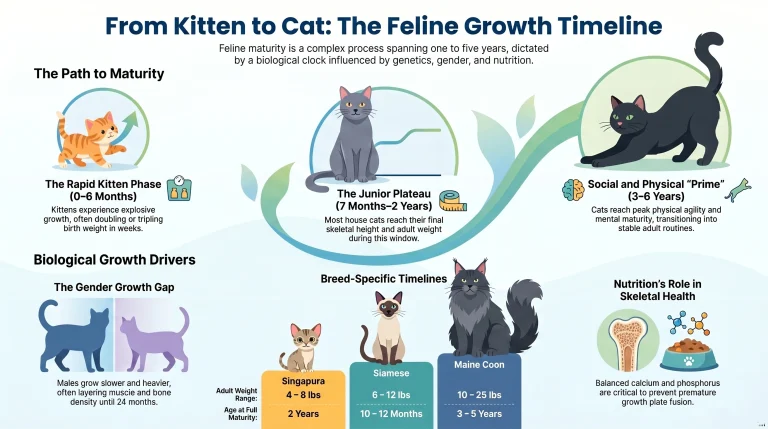
I watch most house cats reach adult size between about 12 and 18 months. Growth is fastest in the first six months — kittens can change hugely in just weeks — then slows after their first birthday. By 12 months many cats are ready for adult food and steadier activity levels. Physical maturity also means bones harden and muscle fills out, which can take a bit longer for some cats. Factors like breed, diet, and health affect timing, so some cats finish by a year while larger breeds may keep filling out until around two years.
Key Ages:
- 0–6 months: rapid growth
- 6–12 months: slowing growth
- 12–18+ months: final maturing
To determine your cat’s current life stage based on their age, try our free cat age calculator for instant results.
How Breed Shapes Final Size
Big breeds that grow slowly
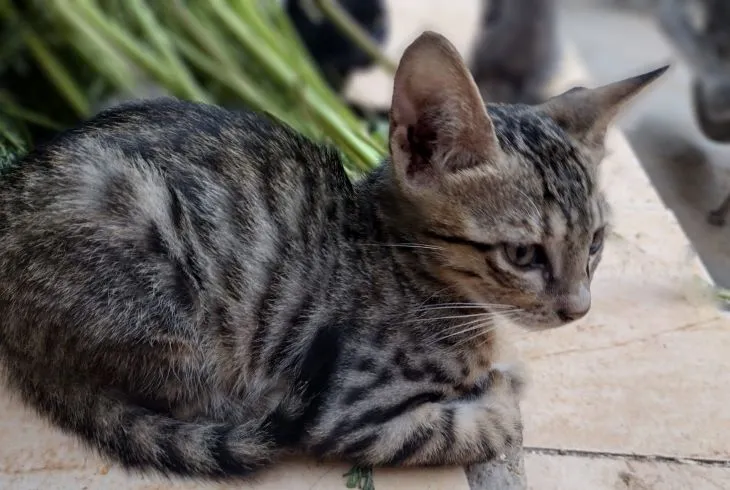
I’ve seen some large cats keep getting bigger for years. Breeds like Maine Coon, Ragdolls, and Norwegian Forest Cats often take 3–5 years to fill out. They grow bone, muscle, and coat slowly, so their full adult look appears over time.
- Growth span: ~3–5 years
- Traits: heavier bones, fuller coats, gradual weight gain
Small breeds that mature quickly
I’ve also watched small, slender breeds finish fast. Cats such as Siamese and Abyssinian usually reach adult size by about 10–12 months. They stay lean and agile, with most growth happening in their first year.
- Growth span: ~10–12 months
- Traits: slim build, early maturity, quick weight stabilization
Do Male and Female Cats Grow Differently?
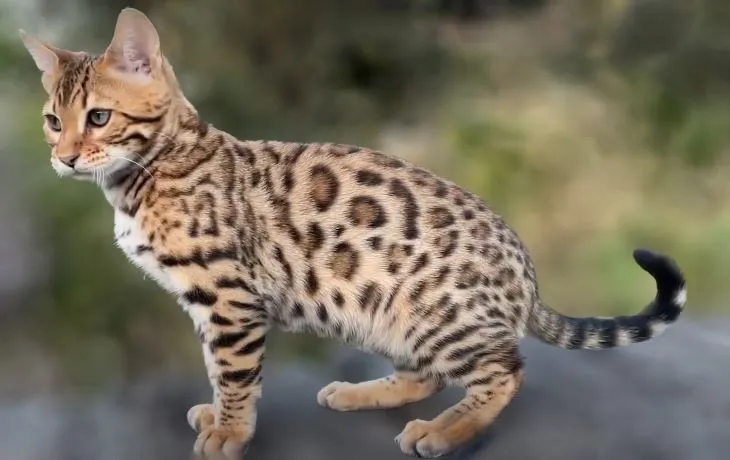
I notice male cats usually grow for longer and get bigger overall. They often keep filling out until about 18–24 months and develop broader shoulders and heads.
Female cats tend to finish sooner, often by 10–12 months, and end up with a more compact build.
- Male: slower, larger frame
- Female: faster, smaller frame
External Forces That Affect a Cat’s Growth
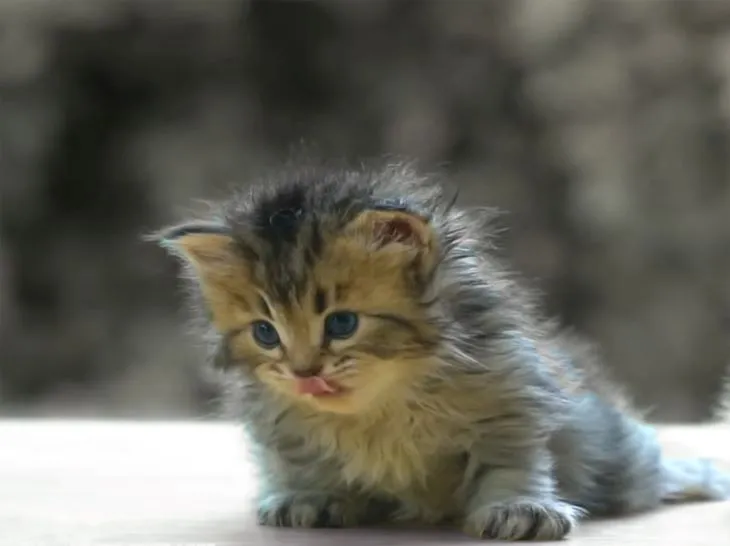
I watch several outside factors shape a kitten’s size and shape. Good food with enough protein and minerals helps bones and muscles form the right way. Illnesses or parasites can slow growth and leave gaps in development. Spaying or neutering won’t change final size, but the timing can alter growth-plate closure and make bones stay longer. I keep these points in mind to help a cat grow strong and healthy.
If your kitten’s growth seems stunted or they show other unusual symptoms, learn to recognize warning signs your cat is crying for help so you can seek veterinary care promptly.
At What Age Do Cats Stop Growing?
| Cat Type | Growth Stops Around |
|---|---|
| Most domestic cats | 12–18 months |
| Female cats | 10–14 months |
| Male cats | 12–18 months |
| Maine Coon | 3–4 years |
| Ragdoll | 3–4 years |
| Norwegian Forest Cat | 2–3 years |
| Siberian Cat | 2–3 years |
| Persian Cat | 12–18 months |
5 Signs Your Cat Has Stopped Growing
Signs include:
- Weight has stabilized.
- Height and body length no longer increase.
- Appetite becomes more consistent.
- Muscle mass replaces rapid growth.
- Energy levels become more predictable.
How I Know My Cat Has Stopped Growing
I watch my cat’s weight each month and note when it stays the same for several months.
I check that the head, legs, and body look balanced and proportional.
I feel the bones—if they seem firm and sturdy instead of soft, my cat is likely done growing.
I also use a simple body condition score to keep track.
Feeding a Growing Cat Properly
Kittens need more calories and protein than adult cats because they are rapidly developing bones, muscles, and organs.
Birth–12 Months
- Feed kitten food
- Multiple small meals daily
- High protein diet
12–18 Months
- Gradually transition to adult food
- Monitor weight gain
- Reduce calories if activity decreases
Large Breeds
- Continue kitten formula longer
- Consult your veterinarian for breed-specific advice
(Not sure how much food your cat needs? Try our Cat Feeding Calculator to estimate the right daily feeding amount based on age and weight).
Frequently Asked Questions
Conclusion
I have watched several cats grow from wobbly kittens to full-sized adults. Every time, I am reminded that growth is not just about size — it is about health, timing, and knowing when to adjust care.
When my Maine Coon hit 18 months and was still growing, I panicked. I thought I was overfeeding him. My vet reassured me: some breeds take years to fill out. That is why knowing your cat’s breed and typical growth timeline matters. It saves you from unnecessary worry — and from making feeding mistakes that could affect their long-term health.
Here is what I want you to take away:
Know your cat’s breed. Track their weight monthly. Transition to adult food at the right time — not too early, not too late. And if you are ever unsure, ask your vet.
Your cat’s growth is a window into their overall wellbeing. Pay attention to it, and you will catch potential issues early, adjust their care appropriately, and enjoy more healthy years together.
Still unsure where your cat fits on the growth timeline? Try our Cat Age Calculator to determine your cat’s current life stage and get tailored care recommendations.