
How To Stop Cats From Chewing Cords: 8 Proven Methods
The information in this article is intended to educate cat parents and is not a substitute for veterinary guidance. In case of any concerns about your cat’s health, please talk with your veterinarian.
I walked into my living room and smelled burnt plastic.
Then I saw it: my lamp cord, shredded. And my cat, Countess, licking her mouth like something had shocked her.
She was lucky. The lamp was off. But that moment made me realize I had to stop my cat from chewing cords before next time was not so lucky.
That day changed how I think about cord chewing. This is not an annoyance. It is a life-threatening emergency waiting to happen.
In this guide, I will tell you exactly what I did to stop Countess from ever touching another cord. Some solutions worked instantly. Others took time. I will tell you which is which so you can act fast.
First, Read This If Your Cat JUST Chewed a Cord
If the cord was PLUGGED IN:
- Unplug it immediately.
- Check your cat’s mouth for burns, redness, or blisters.
- Watch for coughing, difficulty breathing, or unusual behavior.
- Go to an emergency vet even if your cat seems fine. Internal injuries can take hours to show.
If the cord was UNPLUGGED:
- Remove all cord pieces from your cat’s mouth.
- Watch for choking, drooling, or difficulty swallowing.
- Call your vet for advice.
The One Solution That Works INSTANTLY (Do This Today)
You can try behavior training. You can buy bitter sprays. You can hope your cat loses interest.
Or you can make the cords impossible to chew.
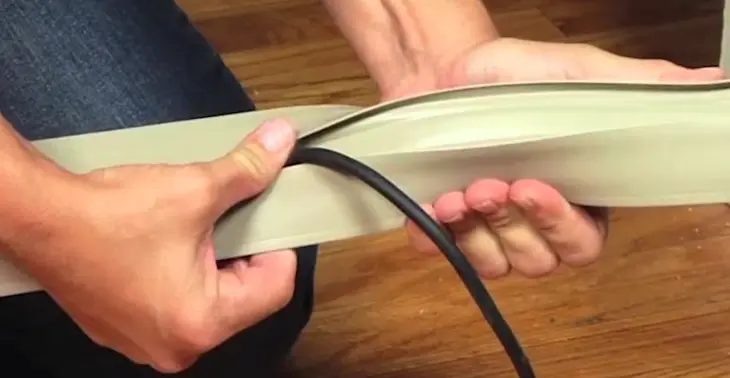
Cord protectors (split plastic tubing) work immediately.
Here is what you need:
- Split plastic cord cover (easily available on Amazon etc)
- Scissors
- Electrical tape (optional)
How to do it (takes approx. 45 minutes for your whole house):
- Unplug every cord you are going to cover.
- Cut the tubing to the length of each cord.
- Open the slit and wrap it around the cord.
- If your cat is an aggressive chewer, wrap electrical tape around the ends so she cannot pull the tubing off.
That is it. Your cat now cannot reach the cord texture she craves.
In my experience, cord covers are the fastest way to stop a cat from chewing cords because they remove access entirely. Training and sprays help, but nothing works as instantly as a physical barrier.
But First, Rule Out Medical Causes (Do Not Skip This)
Cord chewing is sometimes a medical problem, not a behavior problem.
Take your cat to the vet if:
- She chews and swallows non-food items (fabric, plastic, rubber bands)
- She is a purebred Siamese, Burmese, or Tonkinese (these breeds are prone to pica)
- She also licks walls, floors, or litter
- She has lost weight or changed appetite
Medical conditions that cause chewing:
| Condition | What It Looks Like | Vet Test Needed |
|---|---|---|
| Pica | Eats non-food items compulsively | Physical exam, blood work |
| Anemia | Chews cords, licks concrete or dirt | Blood test for red blood cell count |
| Dental disease | Chews cords, drools, bad breath | Oral exam, possible dental X-rays |
| Diabetes | Chews cords, drinks and urinates excessively | Blood glucose test |
How To Stop Cats From Chewing Cords: A Quick-Start Guide
Not everyone wants to read 3,000 words. If you want to stop your cat from chewing cords before she hurts herself, here is your action plan:
Today (2 hours):
- Unplug all cords your cat can reach.
- Order split plastic cord covers on Amazon (search “split cord cover for cats”).
- While waiting for delivery, wrap cords in aluminum foil as a temporary barrier.
- Move phone chargers, laptop cables, and other small cords into a drawer when not in use.
Tomorrow (1 hour):
- Install cord covers on every visible cord.
- Buy a bitter apple spray from a pet store.
- Spray it on a cloth and wipe down all cords (as backup).
This week (daily, 10 minutes):
- Play with your cat using a wand toy before bed.
- Leave puzzle toys with treats during the day.
- If you see your cat approach a cord, redirect her to a silver vine stick or cat grass.
By the end of week 2:
Your cat should have lost interest in cords entirely.
The Backup Solutions (If Cord Covers Are Not Enough)
For some cats, cord covers are not enough. If that is the case, add these backup layers to fully stop your cat from chewing cords.
Bitter Spray (Works for 80% of Cats)
Buy any good vet-recommended Bitter Apple spray. Do not spray directly on cords near outlets. Spray on a cloth, then wipe the cloth along the cord.
Reapply every 2-3 days. Reapply immediately after cleaning your floors (cleaning products remove the bitter residue).
What NOT to use:
- Hot sauce (can burn mouth and eyes)
- Citrus oil (toxic to cats)
- Essential oils (many are toxic)
Double-Sided Tape (For Floor Cords)
Cats hate sticky textures on their paws. Wrap double-sided tape around floor cords. Sticky Paws brand is pet-safe and designed for this.
Aluminum Foil (Temporary Only)
Wrap cords in foil. Cats hate the texture and sound. This works for a few days but cats eventually figure it out. Use only while waiting for cord covers to arrive.
Motion-Activated Air Spray (For Desperate Cases)
Place a motion-activated air spray near problem cords. When your cat approaches, a burst of air startles her (harmless but effective). Expensive but works for stubborn chewers.
The Long-Term Fix (Training & Enrichment)
Barriers work instantly. Training works permanently.
Cats need to chew, especially kittens. Provide safe alternatives:
Give Your Cat Something Better to Chew
- Cat-safe chew sticks
- Cat grass (wheat grass – grow it in a small pot)
- Cardboard chew toys
- Dental treats
How to introduce them:
- Rub catnip on the safe chew toy.
- Place it near where your cat usually chews cords.
- When your cat approaches a cord, say “no” gently, then pick up the safe toy and offer it.
- When she chews the toy, give a small treat.
- Repeat for 2 weeks.
Tire Your Cat Out During the Day
A bored cat chews. A tired cat sleeps.
- Two 10-minute play sessions daily (wand toy, laser pointer, fetch)
- Puzzle feeders for meals
- Bird feeder outside a window
- Rotate toys weekly (put some away, bring others out)
As my vet said: “A tired cat is a well-behaved cat.”
Not sure how much to feed your cat each day? Our cat feeding calculator takes the guesswork out of portion sizes based on your cat’s weight, age, and activity level.
Special Situations
Kittens Who Chew Everything
Kittens between 3-7 months are teething. Their gums hurt. Chewing relieves pain.
What works for teething kittens:
- Soft rubber teething toys
- Chilled (not frozen) wet washcloth – supervise so she does not eat fabric
- Extra playtime before bed to tire her out
The teething phase passes. Be patient for 2-4 months.
Speaking of new kittens, if you are still searching for the perfect name for your little chewer, try our cat name generator for hundreds of unique ideas.
Cats Who Eat Cords (Not Just Chew)
If your cat swallows cord pieces, this is a medical emergency called pica.
Signs of pica:
- Chewing AND swallowing non-food items
- Vomiting pieces of plastic or fabric
- Constipation or straining to poop
What to do:
- Vet visit for blood work (check for anemia, diabetes)
- Ask about anti-anxiety medication
- Remove ALL cords from your cat’s environment (no exceptions)
- Consult a veterinary behaviorist
What I Learned From My $300 Mistake
I tried everything wrong before I got it right.
Mistake 1: I shouted at Countess when I caught her chewing. She started hiding her chewing – doing it when I was not home. I trained her to chew in secret.
Mistake 2: I used a citrus spray I found online. She vomited twice. I learned later that citrus oils are toxic to cats.
Mistake 3: I assumed she would grow out of it. She was 5 years old. Adult cats do not “grow out” of chewing.
What actually worked: Cord covers + treating her anemia + chew sticks.
It took 3 weeks. Now she is 8 years old and has not chewed a cord in 3 years.
Frequently Asked Questions
Conclusion
Cord chewing is not cute. It is not a phase. If you want to stop your cat from chewing cords, the time to act is now – not after an emergency vet visit.
But here is the good news: you can solve this in one weekend.
Cord covers work instantly. Bitter spray works as backup. Play and redirection work long-term.
Take 30 minutes today. Cover your cords. Save your cat’s life.