
How To Stop Cats From Peeing On Carpet: A Complete Guide Based on 12 Years of Experience
The information in this article is intended to educate cat parents and is not a substitute for veterinary guidance. In case of any concerns about your cat’s health, please talk with your veterinarian.
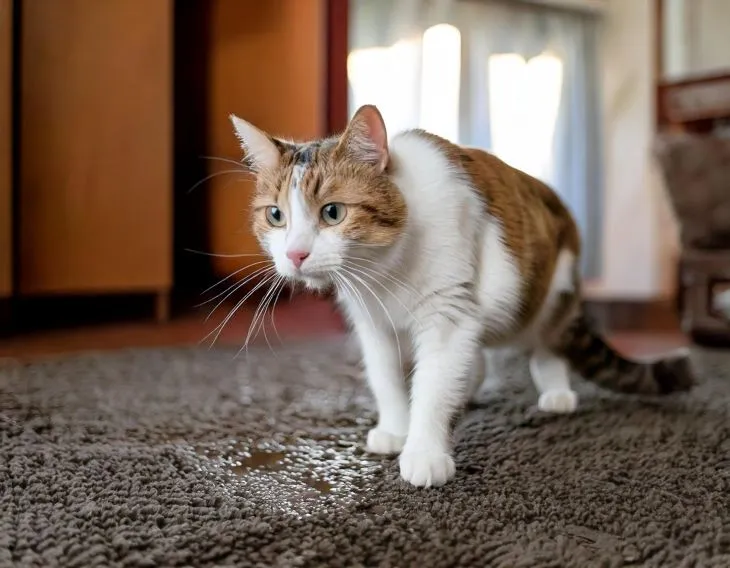
It started with a strange smell near the stairs. Then, a damp spot on the new living room rug. Within a week, my senior cat, Mochi, was peeing on every soft surface she could find. I was frustrated, my house smelled, and I didn’t know what I had done wrong.
After 12 years of owning cats and working through this exact issue more times than I’d like to admit, I’ve learned that inappropriate urination is rarely about “revenge” or “spite.” It’s a cry for help. This guide shares the exact step-by-step process I’ve used to resolve carpet peeing—not just for my own cats, but for the dozens of fellow owners I’ve counseled through local shelter volunteer work.
Step 1: The Non-Negotiable Vet Visit (Before You Do Anything Else)
Before you buy a new litter box or change their food, you must rule out a medical issue. I learned this the hard way after spending weeks trying behavioral tricks on Mochi, only to discover she had a painful urinary tract infection (UTI).
According to veterinary sources like PetMD, common medical causes for inappropriate urination include:
- Urinary Tract Infections (UTIs) : Causes pain and a frequent, urgent need to urinate.
- Feline Idiopathic Cystitis (FIC) : Bladder inflammation often triggered by stress.
- Kidney Disease or Diabetes: Leads to increased urine production and accidents.
- Arthritis: Makes stepping into a high-sided litter box painful.
Your Action Step: If your cat has started peeing on the carpet, schedule a vet visit immediately. A simple urinalysis can rule out most of these conditions. Treat the medical issue first, then fix the behavior.
Step 2: The “Cat’s Eye View” Diagnosis – Why Your Carpet?
Once your vet gives your cat a clean bill of health, it’s time to become a detective. Your cat isn’t being “bad.” They are communicating that something in their environment is wrong. The carpet is just the messenger.
The 5 Most Common Triggers I’ve Seen
| Trigger | What It Looks Like | Quick Fix to Try |
|---|---|---|
| Dirty Litter Box | You scoop less than once a day. The box smells. | Scoop twice daily. Completely change litter weekly. |
| Box Location or Type | The box is in a loud basement, near a washing machine, or has a lid. | Move to a quiet, accessible spot. Remove the lid. |
| Territorial Stress | A new pet, a new baby, or even a stray cat seen outside a window. This is similar to why cats scratch surfaces – both behaviors are natural forms of communication and scent marking. | Add Feliway diffusers. Create high perches for escape. |
| Unfamiliar Scent | You just bought a new rug, cleaned with a strong chemical, or had guests over. | Clean with an enzymatic cleaner (more on this below). |
| Litter Aversion | You recently switched to a new, strong-smelling litter. | Switch back to an unscented, clumping, fine-grain litter. |
Your Action Step: Go through the table above and be brutally honest. If you suspect stress is the trigger, learn to recognize other signs your cat is stressed so you can address the root cause. For my cat Mochi, the trigger was a new covered litter box that trapped smells. She felt trapped. I removed the lid, and the peeing stopped within 48 hours.
Step 3: The Most Important Cleaning Secret (Stop the Cycle)
If you clean cat pee with regular household cleaner (like bleach or vinegar), you are making it worse. From a cat’s perspective, your rug still smells like a toilet.
Cats have a superpower-level sense of smell. You need to break down the uric acid crystals in the urine, which general cleaners can’t do.
The Only Solution: Enzymatic Cleaners
These cleaners use natural enzymes and bacteria to literally digest the urine compounds, eliminating the smell entirely.
My Step-by-Step Cleaning Process:
- Absorb: Blot (don’t rub!) as much fresh urine as possible with paper towels.
- Soak: Liberally apply an enzymatic cleaner (like Nature’s Miracle or Rocco & Roxie). Make sure it soaks into the carpet padding.
- Wait: Let it sit for 10-15 minutes. This is crucial for the enzymes to work.
- Blot Again: Blot up the excess cleaner.
- Find Hidden Spots: Use a UV black light in a dark room. Old urine spots will glow yellow-green. Treat these spots, too.
If you have a new kitten who is still learning, read our complete guide on how to litter train a kitten for step-by-step instructions.
Step 4: Practical Solutions for a Peaceful Home
After you have addressed medical issues, cleaned thoroughly, and identified triggers, use these proven strategies to rebuild good litter box habits.
1. Optimize the Litter Box Setup
- The Golden Rule: Have one more box than the number of cats (e.g., 2 boxes for 1 cat, 3 boxes for 2 cats).
- Go Large & Open: The ideal box is large, shallow, and uncovered. Your cat should be able to turn around easily and see their surroundings.
- Location is Key: Place boxes in quiet, low-traffic areas. Not next to their food or water.
2. Reduce Stress & Anxiety
- Pheromone Diffusers: Products like Feliway release calming synthetic cat pheromones. They have been a game-changer in my multi-cat household.
- Provide “Catified” Spaces: Give your cat vertical territory (cat trees) and hiding spots (cardboard boxes). This helps them feel secure.
3. Deterrents for Problem Spots
While you’re retraining habits, physically block access to favorite peeing spots.
- Aluminum Foil: Place sheets of foil on the carpet. Most cats hate the texture and sound.
- Plastic Carpet Runners (Nubs Up) : Flip a plastic runner so the plastic nubs face up. It’s uncomfortable to walk on.
- Baby Gates: Restrict access to certain rooms until the behavior is resolved.
Frequently Asked Questions
Conclusion: You Can Fix This
Dealing with a cat peeing on the carpet is incredibly frustrating, but it is almost always solvable. Remember the sequence:
- Go to the vet. Rule out medical causes first.
- Clean right. Use an enzymatic cleaner everywhere.
- Be a detective. Find and fix the environmental trigger (dirty box, stress, location).
- Be patient. Your cat is not the enemy. They are trying to tell you something is wrong.
My cat Mochi lived to be 15, and we never had another accident after that first month of troubleshooting. You can get there, too.